The most general approach to getting back on top is the Getting Things Done standard of:
- Collect open loops into an Inbox
- Process them to where they belong
- Organize them as needed
- Review regularly
- Take action
However, one of the places users tend to “fall off the wagon” in task management is when they feel so overwhelmed by a list such as their Today list that they cannot bear to look at it. There is simply too much.
Part of the trouble is the approach. You may feel that you need to put everything you need to do today on the Today list. That would be an understandable assumption. However, a Today list fails when used this way.
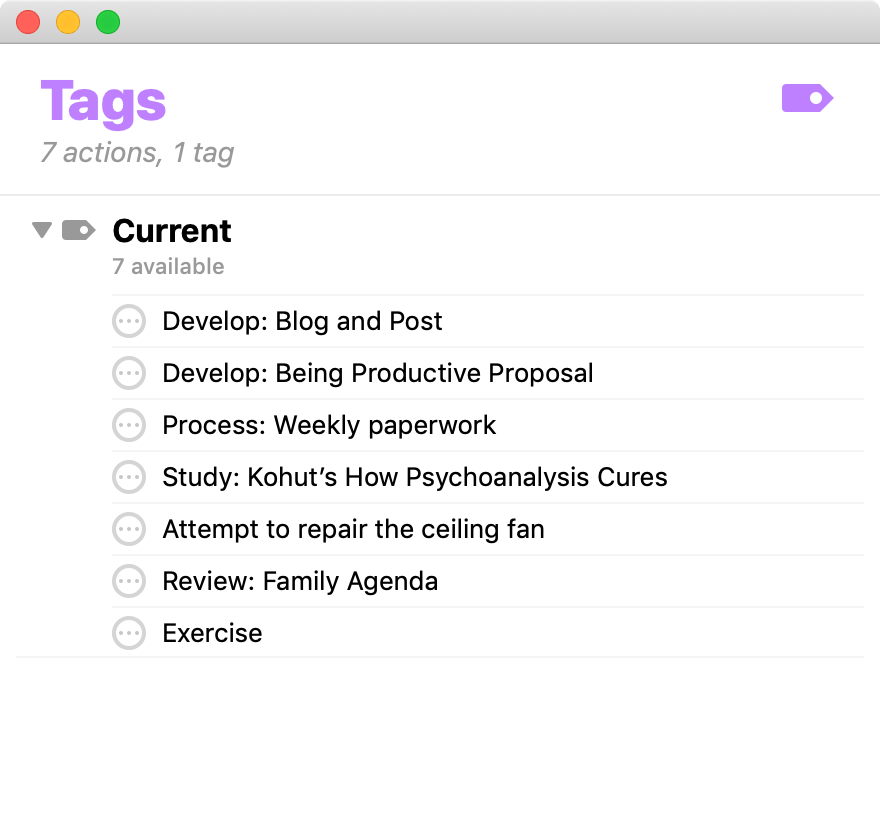
Much more useful is that it contains what you believe you can do today.
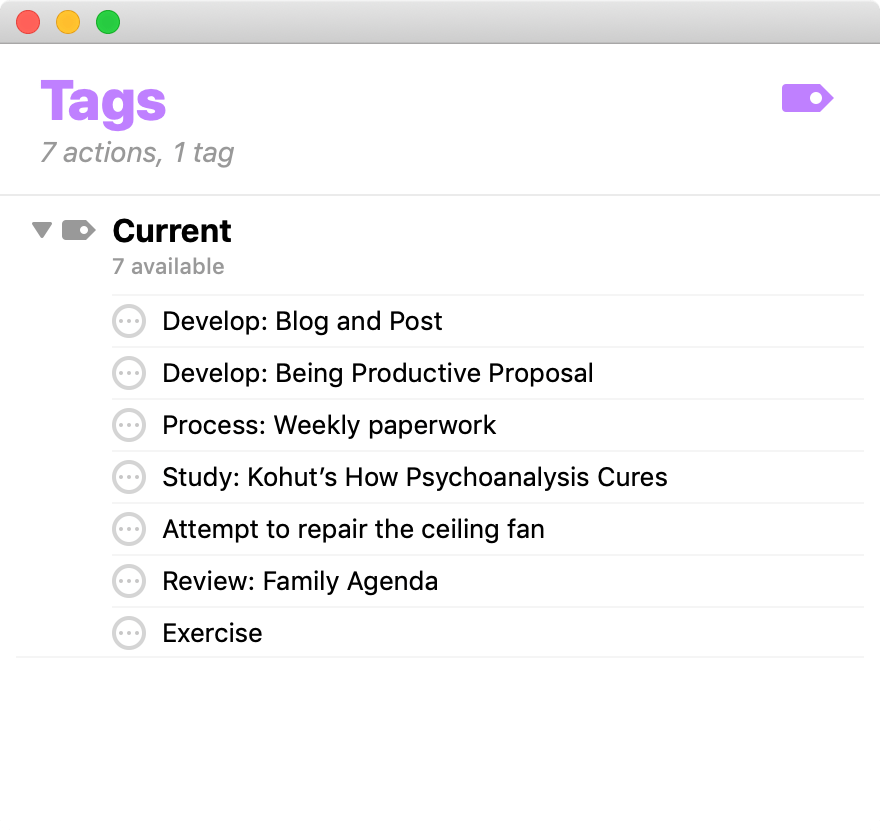
A list must be sensed as completable for it to be fully useful. As soon as it is not, it is poisoned. You may have a list of 10 items, 9 of which you can do where you are and 1 of which you cannot because you would need to go to another room to do it. The list is poisoned. Perhaps not terribly so, but it is at least compromised.
An overburdened list is similarly poisoned. There is too much on it. It is not completable and your unconscious self knows it. As soon as a list does not feel completable, we need to address it. Solutions include:
- We can break it into separate action lists - e.g. in the example above, we can have a list for this room and another list for the next room.
- We can break items down into individual sessions by setting them to repeat. That way, we can do some of a task, mark it complete and have it appear on the list at the next desired time.
- We can remove items by setting them on On Hold - perhaps transferring them to a project set On Hold.
- We can move items to a “Considered” list which is a set of things you might like to do after completing the Today list.
There are certainly more variations and options that perhaps a book might address.
Once the list becomes actionable, it takes on a new charge and we are able to move forward once again.
Of course, not everything that needs doing may get done. But if there was not enough time and attention in the day to do them in the first place, they wouldn’t get done anyway. As you move some items to other lists, e.g. Consider, or On Hold, you can create new tasks such as “Call Broderick to say, the monkeys have escaped; Project X needs to be postponed” or whatever needs to be done to delay or delegate. At least you’ll have been honest with what needs to be addressed and no longer be so overwhelmed that you cannot move forward at all.